
Miner Fighters
Unico StudioStrategy
4.6203.00 Reviews
- Version
- 3.9.2
- Installs
- 100.00K
- Age Rating
- Everyone
Screenshots
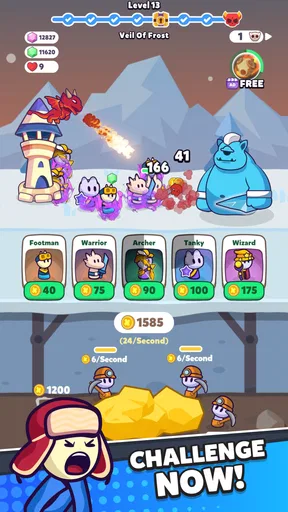


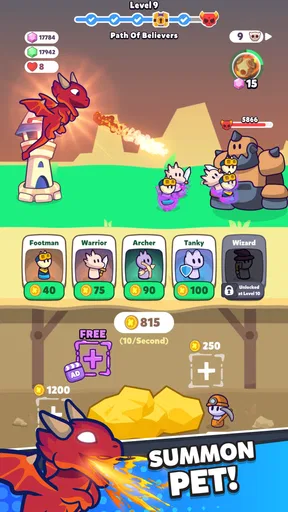
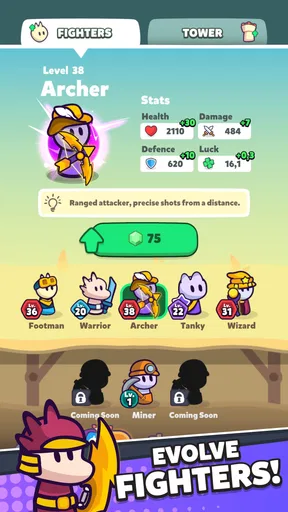
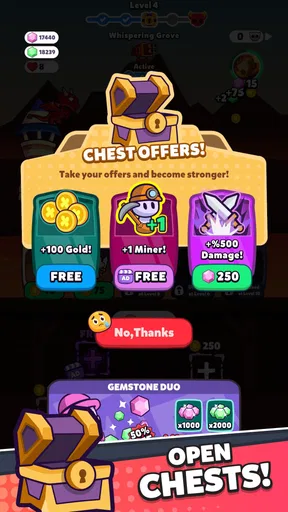
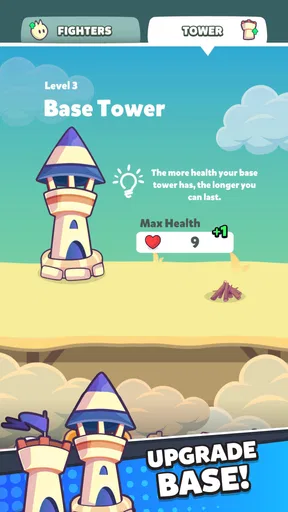
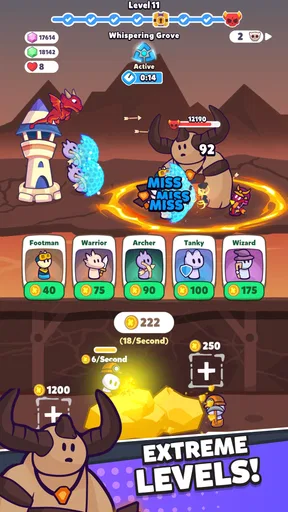
Our Review of Miner Fighters
 Analysis by Appyee
Miner Fighters is a strategy game from Unico Studio that puts a simple question at the center of each session: how should I build a team of miners who can survive increasingly serious fights? I found the appeal in the combination of recruitment, hero upgrades, boss battles, and reward decisions. It is easy to understand within a few minutes, but it still asks me to think about where limited progress should go rather than tapping through every option automatically.
The game is free to play and suitable for Everyone, which makes it approachable for younger players and for anyone who wants a light strategy experience on a phone. It runs on Android devices using version 6.0 or later. The current version is 3.9.2, and the game has already passed 100K installs with a 4.6 average from around 5.2K ratings. Those figures suggest that it has found a solid audience, although popularity alone does not make it the right choice for every strategy fan.
How the decision-making feels in a short session
The strongest part of Miner Fighters is the way its basic loop turns small choices into a sense of preparation. Recruiting miners gives me a reason to look beyond the next battle, while upgrading heroes makes each reward feel connected to a longer plan. The boss encounters then act as a test of whether I have spent those resources sensibly. I never felt that the game required a complicated rulebook before letting me play, but I also did not want to treat every upgrade as interchangeable.
That balance matters on a mobile device. A strategy game can become tiring when every decision is buried under menus, yet it can also feel empty when the best move is always obvious. Here, the useful habit is to pause before spending rewards. I prefer to ask whether my current team needs immediate strength for the next boss or whether a broader improvement will make later progress smoother. That small planning horizon gives the game more character than its compact presentation might suggest.
Recruitment is particularly important because it changes how I think about the team as a whole. I do not view a new miner only as another individual unit. I consider whether the addition helps me handle the kind of obstacle currently stopping progress. If my group is already comfortable with ordinary encounters but struggles when a boss appears, saving resources for a more meaningful upgrade can be wiser than constantly improving the easiest part of the journey.
This is also where the game works well for people who enjoy gradual optimization. I can play for a short break, make one or two decisions, and leave with a clear idea of what I want to improve next time. It is not a strategy title that demands a long uninterrupted evening. The structure suits a commute, a waiting room, or a few minutes after dinner, provided the player enjoys incremental progress rather than immediate, dramatic victories.
Planning around bosses instead of spending blindly
Boss fights give the progression a useful rhythm. They are not just another button in the loop; they create a point at which previous choices become visible. When I approach one, I try not to spend every available reward simply because it is available. Keeping a reserve gives me room to respond if the current setup proves weaker than expected. That is a practical lesson for new players: a resource held for a clear problem can be more valuable than a small improvement made out of habit.
I also recommend treating failed attempts as information rather than as a reason to restart the entire plan. A difficult boss can reveal that the team is underdeveloped, that the chosen upgrade path is too narrow, or that progress needs to be built over several shorter sessions. The game is more enjoyable when I use that setback to adjust the next decision instead of expecting every encounter to fall immediately.
One non-obvious strength is that the game encourages a distinction between progress that feels good and progress that is strategically useful. A visible hero upgrade can be satisfying, but it may not solve the specific problem blocking me. I get better results when I connect each purchase to a question: will this help me survive the next major fight, improve the team’s general reliability, or unlock a stronger route for future rewards? That simple checklist prevents a lot of unfocused spending.
There is a trade-off, though. Players who want detailed control over every action may find the experience too streamlined. Miner Fighters focuses on team preparation and progression rather than presenting itself as a large, highly granular strategy simulation. I enjoy that restraint on a phone, but someone looking for elaborate battlefield positioning, extensive diplomacy, or a huge technology tree should choose a deeper alternative instead.
Where risk and reward enter the progression
The reward structure gives the game its forward pull. Each improvement promises a better chance against tougher opposition, but the interesting question is when to claim a benefit and when to wait. I found that the most reliable approach was to avoid treating every reward as an emergency resource. Some rewards make sense immediately when a boss is close; others are more valuable when combined with a later recruitment or upgrade decision.
That does not mean the game becomes punishing if I make a poor choice. Its accessible presentation keeps experimentation manageable. Still, choices have enough consequence to make planning worthwhile. I would rather see that kind of mild pressure than a system where every reward is automatically converted into the same upgrade and the player simply watches numbers rise.
In-app purchases range from $1.99 to $22.99 per item, so free access does not mean every optional purchase has the same scale. I would advise new players to spend time learning the normal progression before buying anything. The important test is whether a purchase solves a problem I genuinely understand or merely encourages me to skip a decision I have not yet learned to make. For a casual player, the free starting experience is the sensible place to judge the game’s rhythm.
The presence of optional spending also affects how I evaluate rewards. If I am tempted to pay because a boss has stopped my progress, I first ask whether I have actually optimized the team or simply reached a normal pause in the progression. That distinction protects the experience from becoming a reaction to frustration. It is a useful habit in any free strategy game, but it feels especially relevant here because the loop is built around repeated improvement.
Another practical tip is to set a personal stopping point for a session. I find that decisions become less thoughtful when I keep playing only to recover from one disappointing result. Ending after a clear upgrade or a useful lesson keeps the next session focused. This is not a complex feature; it is a way of using the game’s short-session design without allowing the reward cycle to dictate every minute of free time.
Adapting when the first plan stops working
Adaptation is where Miner Fighters earns its strategy label for me. A team that feels adequate during ordinary progress may not be ready for a boss, and a plan that was efficient early on may become less attractive once the cost of improvement rises. I enjoy games that ask me to revise a plan without making the earlier choices feel completely wasted. This one generally creates that feeling through its steady upgrade-and-test rhythm.
My preferred method is to identify the exact point of failure. If the team cannot reach a boss comfortably, I look at general development. If it reaches the fight but cannot finish it, I consider whether a focused hero improvement would be more useful than spreading rewards across the roster. If progress feels slow everywhere, I stop chasing one dramatic solution and return to consistent development. These are simple distinctions, but they turn vague frustration into an actionable plan.
Recruitment should also be handled with patience. A new miner is exciting, yet adding options does not automatically improve a team if the existing group is neglected. I would rather build a dependable foundation and then expand it with a purpose than collect additions without understanding how they fit into the current challenge. That approach is especially helpful for younger players, who may naturally want to select every new character as soon as possible.
The game’s approachable age rating supports family-friendly use, but adults should not mistake that for a complete lack of strategy. The decisions are presented in a friendly way, while the better results still come from recognizing patterns in progress and spending. It can work as a first strategy game for someone who is learning how upgrades and resource priorities interact, even if experienced strategy players may eventually want more systems to master.
Compared with a typical puzzle game, Miner Fighters offers a longer sense of ownership because the team develops across sessions. Compared with a large strategy game, it is much less demanding and easier to pick up without a guide. Compared with an action-heavy boss game, its emphasis is on preparation rather than reflexes. I see that middle position as its clearest identity: it is for players who want to make planning decisions but do not want a full-time commitment.
What gives the game depth over time
The long-term appeal depends on whether gradual upgrades remain satisfying after the initial novelty fades. In my experience, the answer depends heavily on how much I enjoy optimization. If I like comparing immediate gains with future value, the progression has enough structure to keep me checking in. If I need constant new mechanics, dramatic story developments, or a large amount of direct control, the simpler loop may start to feel repetitive.
The most useful long-term mindset is to create stages of improvement. I might focus first on making the team reliable, then prepare specifically for the next boss, and only afterward invest in broader growth. This prevents the common mistake of trying to solve every weakness at once. It also makes the game easier to return to after a break because I can remember the current objective instead of reopening it without a plan.
Players wondering whether the game is suitable for brief daily play should find its format comfortable. The recruitment, battle, upgrade, and reward cycle is naturally divided into manageable decisions. Someone looking for a game to play offline for long stretches, however, should consider whether this progression style matches their expectations before committing. Its appeal is not unlimited content on demand; it is the satisfaction of gradually making a team more capable.
Version 3.9.2 is the version I would look for when installing, since using the current release is the best way to avoid judging an older build. The developer, Unico Studio, has positioned the game around a clear and readable concept rather than an intimidating strategy interface. That clarity is valuable, although it also means the experience has fewer places to hide if the central progression does not appeal to someone.
One of the better ways to keep the game interesting is to resist upgrading only the most obvious hero. Concentrating everything in one place may feel powerful for a while, but a balanced team can be more dependable when a boss exposes a different weakness. I would not spread resources perfectly evenly either. The useful compromise is to maintain a stable base while reserving focused investment for the part of the team most relevant to the next obstacle.
There is friction in that approach: the game asks for patience. Progress may feel slower when I save rewards or delay a tempting upgrade, and players who prefer constant unlocks may dislike that restraint. I consider it a fair limitation rather than a flaw, because the planning is the main reason to play. Still, it is a clear reason to skip Miner Fighters if you want immediate power with little thought attached.
My strategy verdict after playing
Miner Fighters is a good recommendation for someone who wants a free mobile strategy game built around recruiting miners, developing heroes, facing bosses, and making measured progress. I like that it gives short sessions a real purpose: I can enter with a goal, make a few meaningful choices, and leave knowing what to try next. The game does not overwhelm me with unnecessary complexity, but it gives enough room to question whether the next reward should be spent now or saved for a more important turning point.
I would recommend it most strongly to casual strategy players, families looking for an Everyone-rated game, and people who enjoy progression that rewards patience. It is also a sensible choice for anyone moving from simple puzzle games toward team-based planning. The free entry point makes it easy to test without immediately committing money, while the optional purchases mean I would keep spending deliberate rather than automatic.
I would skip it if my priority is deep tactical control, rich narrative, competitive multiplayer, or a constantly changing set of complex systems. The game’s strength is its focused loop, and that focus naturally limits its range. It is not trying to replace a large strategy campaign. Instead, it offers a lighter alternative for moments when I want to think about team growth and boss preparation without settling in for a lengthy session.
My final advice is to play the early stages as a learning period rather than rushing toward every reward. Pay attention to what actually blocks progress, keep some flexibility in your resources, and let each boss teach you something about your team. With that approach, the game feels more strategic than its friendly surface first suggests. The best reason to try Miner Fighters is not the promise of instant power, but the small satisfaction of turning a weak mining crew into a team that is ready for its next serious test.
Verdict
Strengths of Miner Fighters
- Simple controls make the mining and combat mechanics easy to learn.
- Mining rewards encourage regular exploration and resource gathering.
- Fighter upgrades provide a clear sense of progression over time.
- Short gameplay sessions suit quick play on mobile devices.
- The mix of mining and combat adds variety beyond standard idle games.
Limitations of Miner Fighters
- Resource collection can become repetitive during longer play sessions.
- Progress may feel slow without frequent upgrades or continued grinding.
- Combat depth is limited compared with dedicated action games.
- The interface can feel crowded when managing several upgrade options.
- Players seeking a story-driven experience may find the narrative too light.
Other Releases by Unico Studio
View All
Brain Test 2: Tricky Stories
Trivia4.7

Brain Test: Tricky Puzzles
Trivia4.7

Who is? Brain Teaser & Riddles
Trivia4.7

Brain Test 3: Tricky Quests
Trivia4.7
Similar Picks in This Category
View All
Clash of Clans
Supercell4.5

Plants vs. Zombies™
ELECTRONIC ARTS3.7

Lords Mobile: Kingdom Wars
IGG.COM4.5

Clash Royale
Supercell4.4

State.io — Conquer the World
CASUAL AZUR GAMES4.1

Car Driving School : Car Games
Spark Game Studios3.9
Frequently Asked Questions
What is Miner Fighters and how does the game work?
Miner Fighters is an action-focused mining game that combines resource collection, exploration, and combat. You control a miner, explore underground areas, gather valuable materials, improve your equipment, and face hostile enemies or environmental challenges. The gameplay is designed around short missions and gradual progression, so it can be approachable for new players while still offering goals for users who enjoy upgrading characters and unlocking better tools.
Is Miner Fighters free to download and play?
Miner Fighters can generally be downloaded for free, although the exact availability and pricing may depend on whether you use Android or iOS and on your region. Like many mobile games, it may include optional in-app purchases for upgrades, currency, cosmetic items, or other advantages. You can usually play without spending money, but progression may require more time if you choose not to purchase optional content.
Does Miner Fighters require an internet connection?
The connection requirements may vary depending on the version and the feature you are using. Basic gameplay may be available offline in some situations, but an internet connection is commonly needed for advertisements, cloud saving, updates, events, leaderboards, purchases, or online-related functions. Before starting a long session without Wi-Fi or mobile data, it is worth testing the game once while connected and checking its current store description.
Is Miner Fighters suitable for children?
Miner Fighters may be suitable for older children and teenagers who enjoy cartoon-style action, mining, and light combat, but parents should review the current age rating before installation. The game can include enemy encounters, competitive elements, advertisements, or optional purchases. If children will use it, enabling parental controls and restricting in-app purchases is recommended, especially because mobile games may make upgrade offers appear during normal progression.
What devices are compatible with Miner Fighters, and does it take much storage?
Compatibility depends on the version available in the Google Play Store or Apple App Store, including the minimum Android or iOS requirements set by the developer. The initial download may be relatively small, but updates and additional game resources can increase storage use over time. For the best experience, install it on a device with a supported operating system, sufficient free space, and reasonable performance for smoother controls and loading.
Play our best games!


